
Squint Surgery

Complex Squint Cases Explained

Complex Squint Cases Explained: From Duane to Brown Syndrome

Squint Surgery

Complex Squint Cases Explained Brown syndrome is a rare form of restrictive strabismus affecting approximately 1 in 20,000 individuals, characterized by limited eye elevation when looking inward. The condition can be congenital (present from birth) or acquired (due to trauma, inflammation, or surgical complications), with unilateral cases being more common than bilateral. Key symptoms include […]
Intermittent Squints london

Understanding Intermittent Squints: When Is It Time to Seek Help?

Squint Surgery

Intermittent Squints Intermittent squints are eye alignment disorders that occur occasionally rather than constantly, affecting both children and adults with different underlying causes. Squints are classified by direction (esotropia, exotropia, hypertropia) and pattern (constant, intermittent, alternating), with proper identification essential for treatment planning. Sudden squints may indicate serious conditions like neurological events or trauma, while

London Squint Clinic Featured Image 1

Why Do Squints Return in Adulthood? Causes & Treatment Options

Squint Surgery

Why Do Squints Return in Adulthood? Adult strabismus (squint) can occur as a new condition or as a recurrence of childhood strabismus, with causes including neurological conditions, trauma, thyroid disorders, and age-related changes. Common types of adult squint include esotropia (inward turning), exotropia (outward turning), and vertical deviations, each requiring specific treatment approaches. Childhood squint

Esotropia vs. Exotropia

Esotropia vs. Exotropia: What Type of Squint Do You Have?

Squint Surgery

Esotropia vs. Exotropia Esotropia vs. Exotropia: Esotropia involves inward eye turning (toward the nose) while exotropia involves outward eye turning (away from the nose). Causes vary by age: In children, squints often relate to refractive errors, neurodevelopmental issues, or genetic factors; in adults, they may result from decompensation of childhood squints, neurological conditions, or trauma.

Re Do Squint Surgery

Re-Do Squint Surgery: What to Expect After a Failed First Procedure

Squint Surgery

Re-Do Squint Surgery Revision squint surgery is common and viable, with 20-40% of patients potentially requiring a second procedure Success rates for adult revision procedures range from 60-80%, with most patients reporting satisfaction even with partial correction Wait at least 6-12 months between initial and revision surgeries to allow for complete healing and stabilization Recovery

private squint surgery cost

How much is private squint surgery in the UK?

Squint Surgery

Key Takeaways Private squint surgery in the UK typically costs between £4,000 and £11,000 per eye, depending on complexity, surgeon expertise, and location. Complex cases (vertical deviations, multiple muscle involvement) generally cost 15-30% more than standard horizontal squint corrections. Comprehensive surgical packages should include pre-operative assessments, the surgery itself, anaesthesia, and follow-up appointments. While NHS

age limit for strabismus surgery

What is the age limit for strabismus surgery?

Squint Surgery

Age limit for strabismus surgery There is no absolute age limit for strabismus (squint) surgery – successful outcomes are possible from infancy through advanced age Early intervention in children (6-12 months) may be recommended to promote binocular vision development, but surgery remains effective throughout adulthood Adult strabismus surgery has 80-85% success rates with a single

Squint Surgery london private

Squint Surgery: Costs, Benefits, and Why It’s Worth It

Squint Surgery

Squint Surgery Squint surgery (strabismus surgery) corrects eye misalignment through procedures like recession, resection, or adjustable suture techniques, typically taking 30-60 minutes under anesthesia. Benefits extend beyond cosmetic improvement to include restored binocular vision, eliminated double vision, reduced eye strain, and significant psychological advantages like enhanced self-confidence. NHS treatment is free for qualifying patients but

Dr Nadeem Ali Leading Squint Surgeon

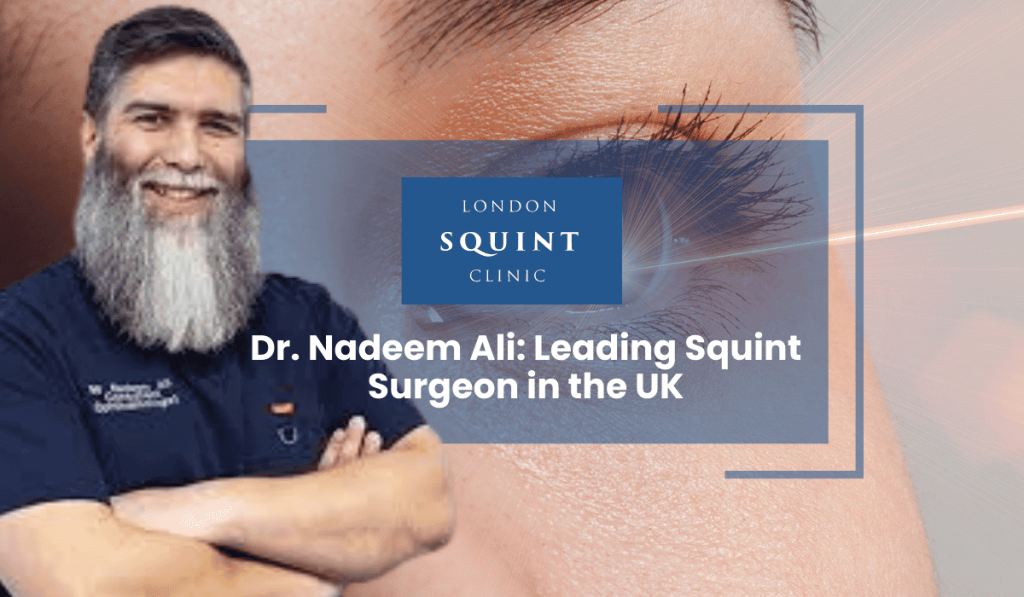
Dr. Nadeem Ali: Leading Squint Surgeon in the UK

Squint Surgery

Dr. Nadeem Ali Dr. Nadeem Ali is one of the UK’s leading squint surgery specialists with over 20 years of experience, combining surgical precision with patient-centered care at London Squint Clinic. Strabismus (squint) presents in various forms including esotropia, exotropia, hypertropia, hypotropia, and cyclotropia, each requiring specific diagnostic approaches. Advanced surgical techniques at London Squint

Can Squint Be Corrected Without Surgery

Can Squint Be Corrected Without Surgery? Non-Surgical Options Explained

Squint Surgery

Can Squint Be Corrected Without Surgery? Squint (strabismus) occurs when eyes point in different directions and can be classified as esotropia (inward), exotropia (outward), hypertropia (upward), or hypotropia (downward). Non-surgical treatments are most effective for early intervention (children under 7), intermittent squints, accommodative esotropia, small-angle deviations, and recent-onset squints. Vision therapy exercises like pencil push-ups

Scroll to Top